

The coral reefs of the Tayrona National Natural Park (PNNT) face increasing threats and evident decline due to climate change, anthropogenic pressure, and environmental degradation. Despite their visible degradation, these reefs are considered resilient due to their development in a complex environment marked by the upwelling of cold waters, continental discharges, and a rugged coastline exposed to strong waves. These particular conditions of the region have favored a high concentration of biodiversity and biological productivity, and it is suggested that they could act as a climate refuge for various marine species.
“The reefs of PNNT are much more than landscapes; they are life sanctuaries”
Based on the research conducted by the group since 2018 in Tayrona National Natural Park, the decision has been made to take the next step toward conservation by integrating quality data collection activities supported by artificial intelligence (AI) with the execution of coral restoration actions. This also promotes collaborative and sustainable work between governmental, non-governmental and private entities, and the local community.
“When the community cares for the sea, it cares for its history, its food, and its future”


Catalina Gómez


Sven Zea

Carlos Daza

Jesús Picón

Helena Benavides
Camila Rodríguez
Felipe Gaitán

Miguel Martínez
Nicoll Lizarazo
Background | Issues | Challenges
The main causes of coral decline in Tayrona National Natural Park are climate change with its extreme events of continental discharges, storms, warming, local runoff water discharges, uncontrolled tourism, solid waste, overfishing, extraction of fauna and flora, and invasive species. For the Caribbean, the significant loss of coral cover occurred in the late 1970s and early 1980s, and in the Magdalena department, it was greater towards the city of Santa Marta than in the heart of Tayrona. This loss led to a decrease in biodiversity and ecosystem services, affecting the quality of life of local communities and generating social and environmental conflicts.
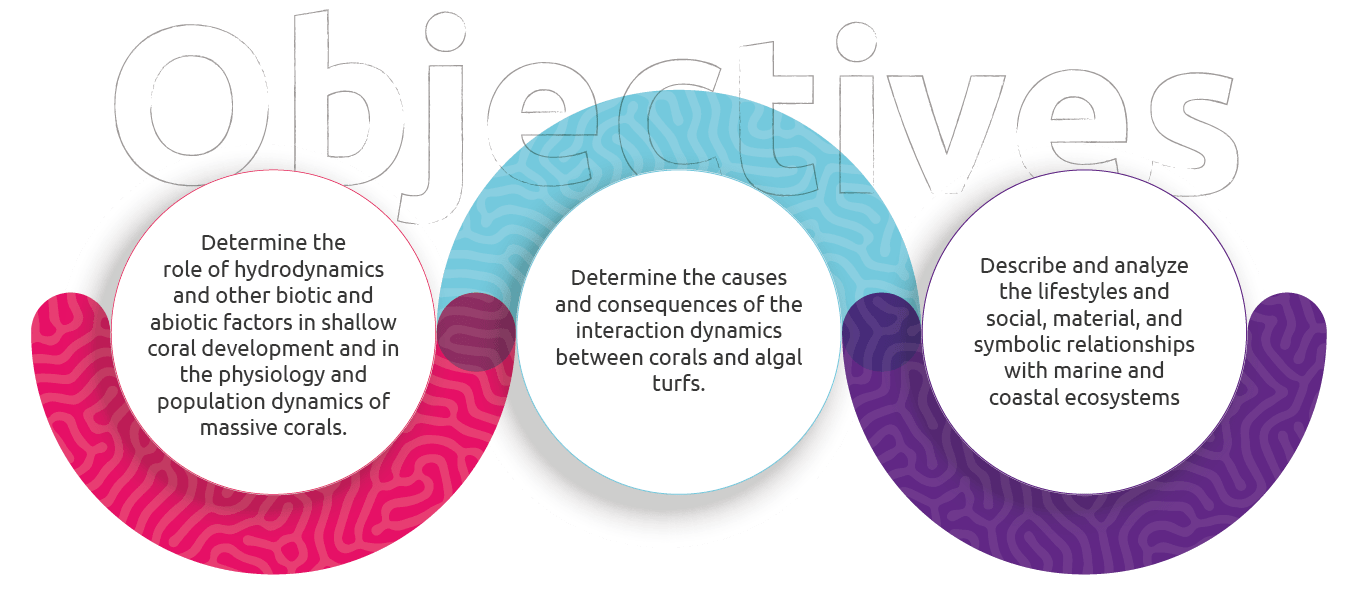
These conflicts led to the creation of the Master Plan for Protection and Restoration of the Tayrona National Natural Park; however, despite significant research efforts, there are still gaps in scientific information that contribute to characterizing the biotic and abiotic factors influencing coral development and health. Understanding these factors is essential for identifying their role and exploring recovery avenues through innovative methods from artificial intelligence to ecological restoration.
Not only is work being done on understanding the natural recovery processes, but also on designing and implementing coral restoration strategies, promoting nature-based solutions created collaboratively with key stakeholders such as local communities, governmental and non-governmental organizations, and tourism service providers.
Do you want to know more information about our project?
If you need to contact our researchers or are interested in our project, you can fill out the following form so that our team can contact you as soon as possible.